
Compassionate Touch for Veterans with Dementia: Project Wrap Up
Posted:Thursday, November 12, 2026
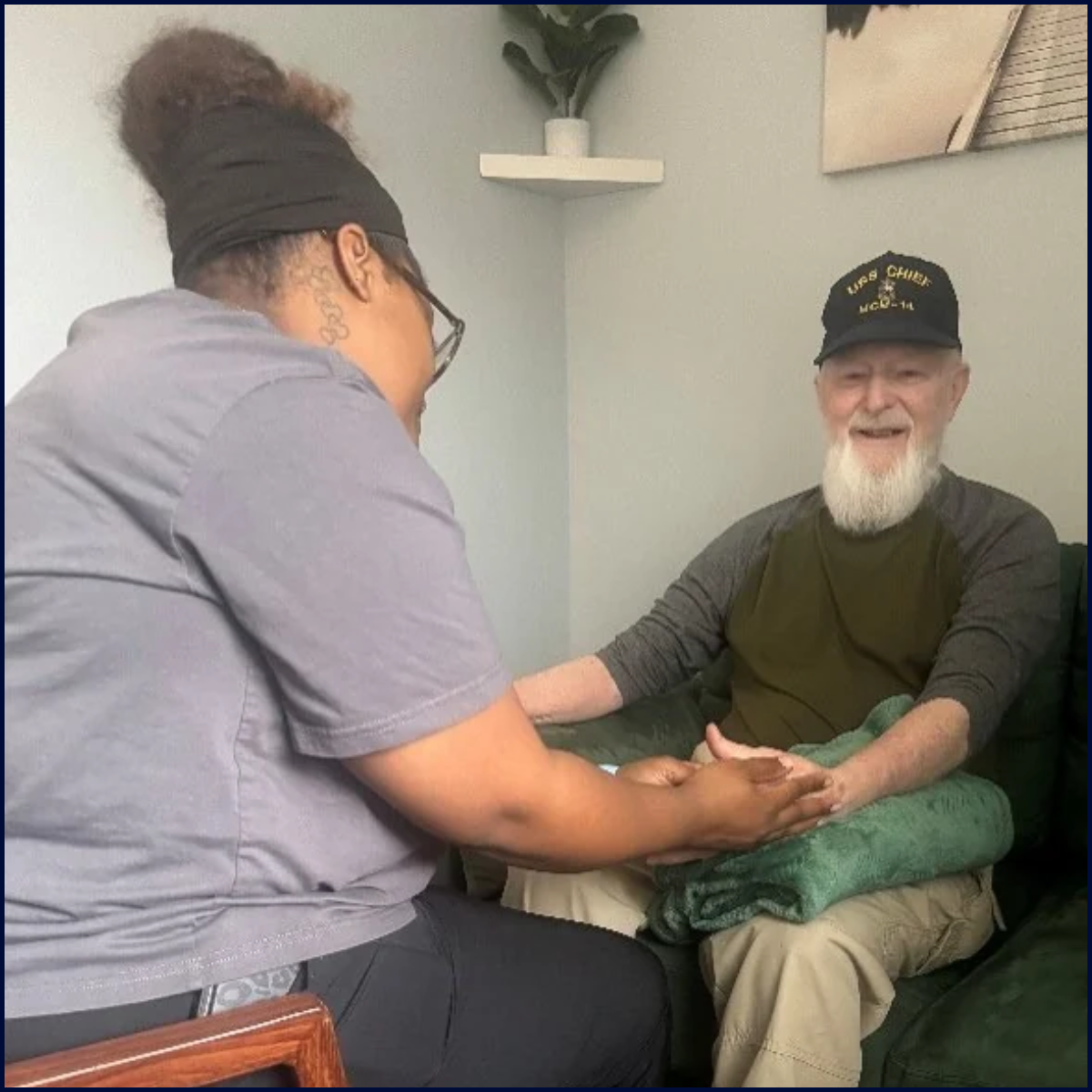
In 2025, the Massage Therapy Foundation awarded Heartfelt Community of Gloucester, Virginia, a $5,000 Community Service Award for its project, “Compassionate Touch for Veterans with Dementia.” The award, sponsored by a gift from Biotone, provided Compassionate Touch® and massage therapy to veterans living with dementia twice a month for six months. Eleven veterans ultimately participated and completed the program.
What began as an opportunity to provide therapeutic massage and honor veterans for their service became something much deeper. The three program therapists— Ginger, Braea, and Jasmine—witnessed how compassionate touch could create trust, reduce tension, provide comfort, and foster meaningful human connection—even when dementia made communication and memory difficult.
One of the clearest examples involved a veteran who was initially hesitant when Ginger introduced herself. He was concerned about his safety and agreed to receive massage only if a trusted staff member, E., remained in the room.
He explained, “It’s not that I don’t trust you. It’s that I trust E. She is like my mom, my wife, my friend, and I know she will make sure I’m safe.”
His words clearly communicated his greatest need: safety. With E. beside him, he allowed Ginger to begin working with his hands and later his back. Throughout the session, he repeatedly returned to the reassurance that she was present. When Ginger explained that she was there to help him feel cared for, relieve discomfort, and support his well-being, he acknowledged that this was exactly what he was experiencing.
He called the massage a blessing and expressed surprise that someone would offer such care. When Ginger explained that she was doing it to thank him for his military service, he responded that the only reason someone would do something like this was if God had told them to. Before the visit ended, he asked her to return. And she did.
Over time, that consistency helped transform uncertainty into trust. What began with a requirement that another trusted person remain in the room developed into a relationship in which he became comfortable receiving care directly from Ginger.
Another veteran initially tolerated only one or two minutes of hand massage before moving away and saying, “well, that’s about enough of that.” With consistent visits, those one or two minutes gradually became 15 to 20 minutes of massage, including his back and neck. By the end of the program, he appeared to recognize Ginger and would reach back when she offered her hand.
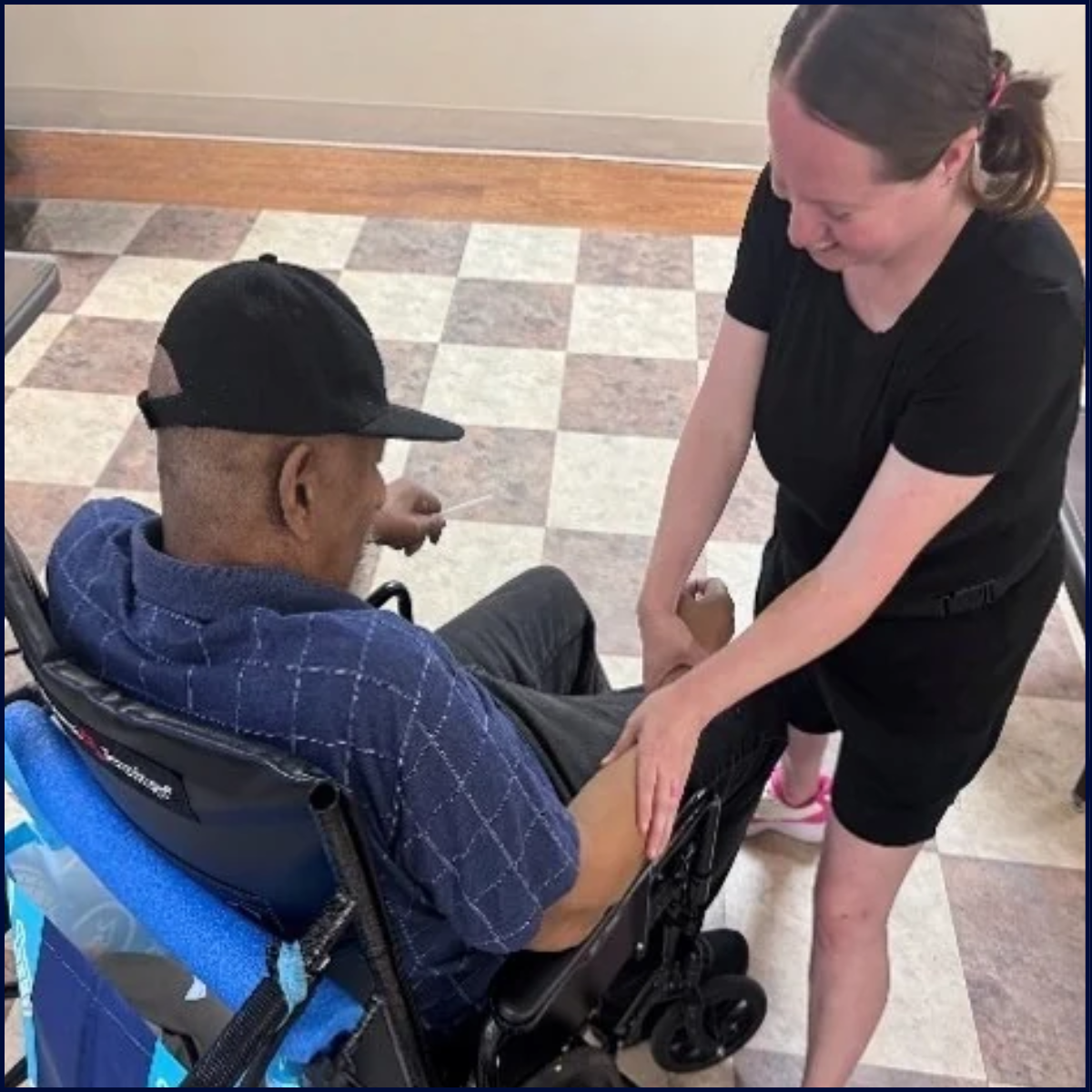
For Braea, another veteran demonstrated how individualized care can make a difference. Because of his dementia, he initially tolerated only about five minutes of massage. Rather than expecting him to adapt to the treatment, Braea adapted her approach to him. She introduced sensory items, including a squishy fish and a toy car, to help hold his attention. During one visit, he remained engaged long enough for her to provide approximately 20 minutes of massage.
“Each session taught me something about adapting massage to the individual in front of me,” Braea reflected. “Massage does not have to look the same for every person to be valuable.”
The therapists also learned to recognize communication beyond words. One nonverbal veteran initially shook his fist to indicate that he did not want the therapists there. Over time, he allowed their visits. Another often declined massage but would reach for the therapist’s hand and sometimes massage the therapist’s hands in return. On one memorable occasion, he and another resident were observed massaging each other’s hands while smiling.
No words were necessary. Touch had become a way to connect.
Caregivers observed other meaningful changes as well. A Licensed Practical Nurse (LPN) at Walter Reed Post Acute Memory Care reported that veterans were “calmer and more relaxed after their massages,” even on difficult days. Another LPN observed that veterans were calmer, easier to redirect, and less restless and that staff had noticed an improvement in appetite. Caregivers also reported reductions in anxiety, agitation, and wandering and described veterans as more at peace following massage and compassionate touch.
The impact extended to family caregivers. T., whose husband is a U.S. Marine Corps Vietnam veteran living with advanced Alzheimer’s disease and receiving home hospice care, described how her husband initially experienced anxiety and fear. Over time, Ginger progressed from working with his hands to his back, injured shoulder, and sometimes his feet. Although he did not remember Ginger’s name or the visits, T. observed that he relaxed and seemed to feel better after each session.
“Heartfelt Community’s connection through healing touch has brought reduced agitation for him, and watching this change in him has served me as his spouse and caregiver by my own reduced stress,” T. said.
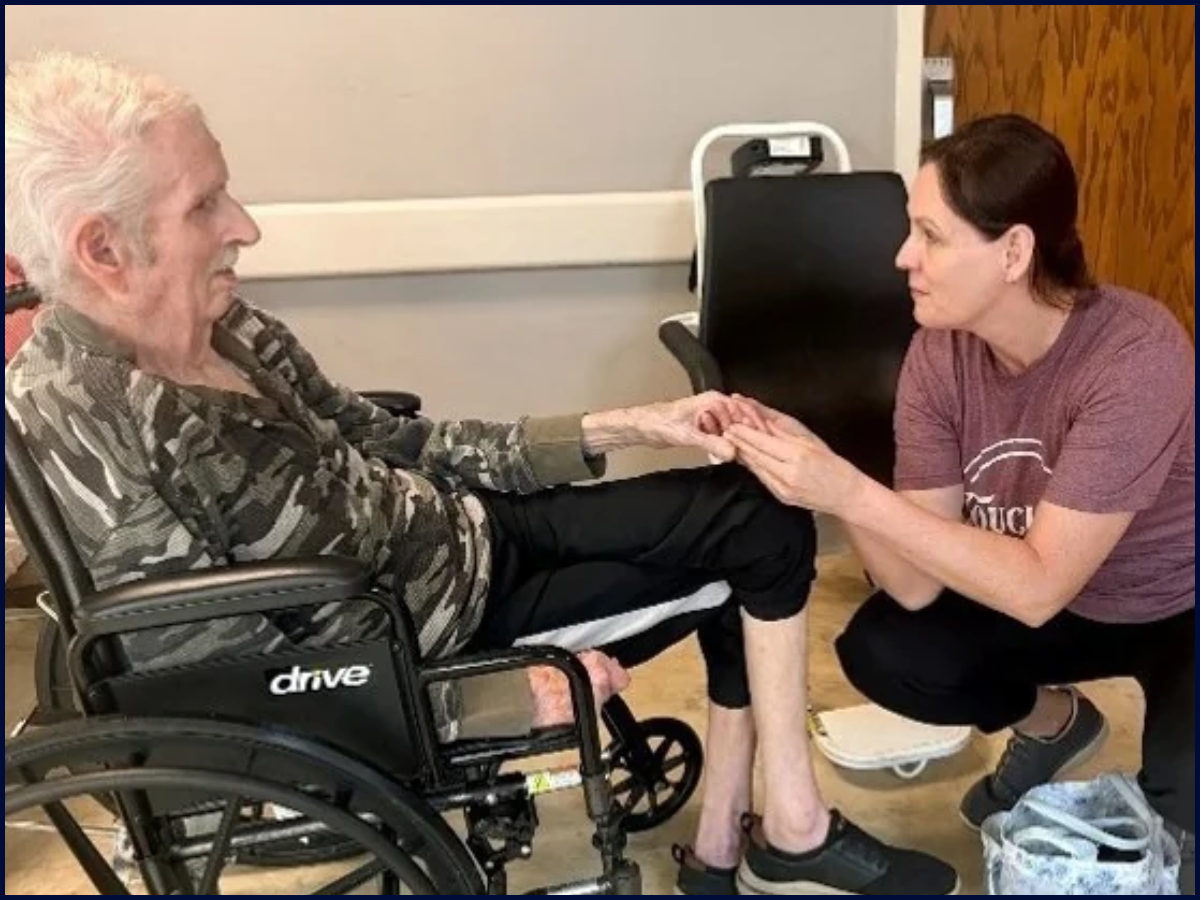
These experiences reinforced an important lesson: the value of compassionate touch cannot always be measured by what a person remembers afterward. A veteran may forget the therapist’s name or forget receiving the massage, yet still experience comfort in the moment. The response may be a relaxed body, a smile, a reaching hand, less resistance, or simply allowing someone to remain close.
For some veterans, progress meant a full 30-minute massage. For another, it meant five minutes becoming 20. For another, it meant allowing a therapist to work on a painful shoulder. For those who could not communicate verbally, it might simply mean accepting a hand.
As Ginger reflected, “Compassionate Touch is about meeting each person where they are. Sometimes that means providing a full massage. Sometimes it means working only with the hands. And sometimes it means simply offering a hand and being present.”
The greatest measure of this program was not simply the number of massages provided. It was the trust that developed, the boundaries that were respected, the physical discomfort that was eased, and the moments of connection created along the way.
The Massage Therapy Foundation award allowed Heartfelt Community to offer veterans more than massage therapy. It allowed therapists to offer consistency, gratitude, dignity, and care—and to remind veterans living with dementia that even when memories fade, the feeling of being cared for can remain.
Heartfelt Community will continue providing Compassionate Touch to veterans on a biweekly basis for as long as they need or desire the service, building upon the relationships and trust established during the grant period.
